INTRODUCTION: THE ILLUSION OF DOING MORE
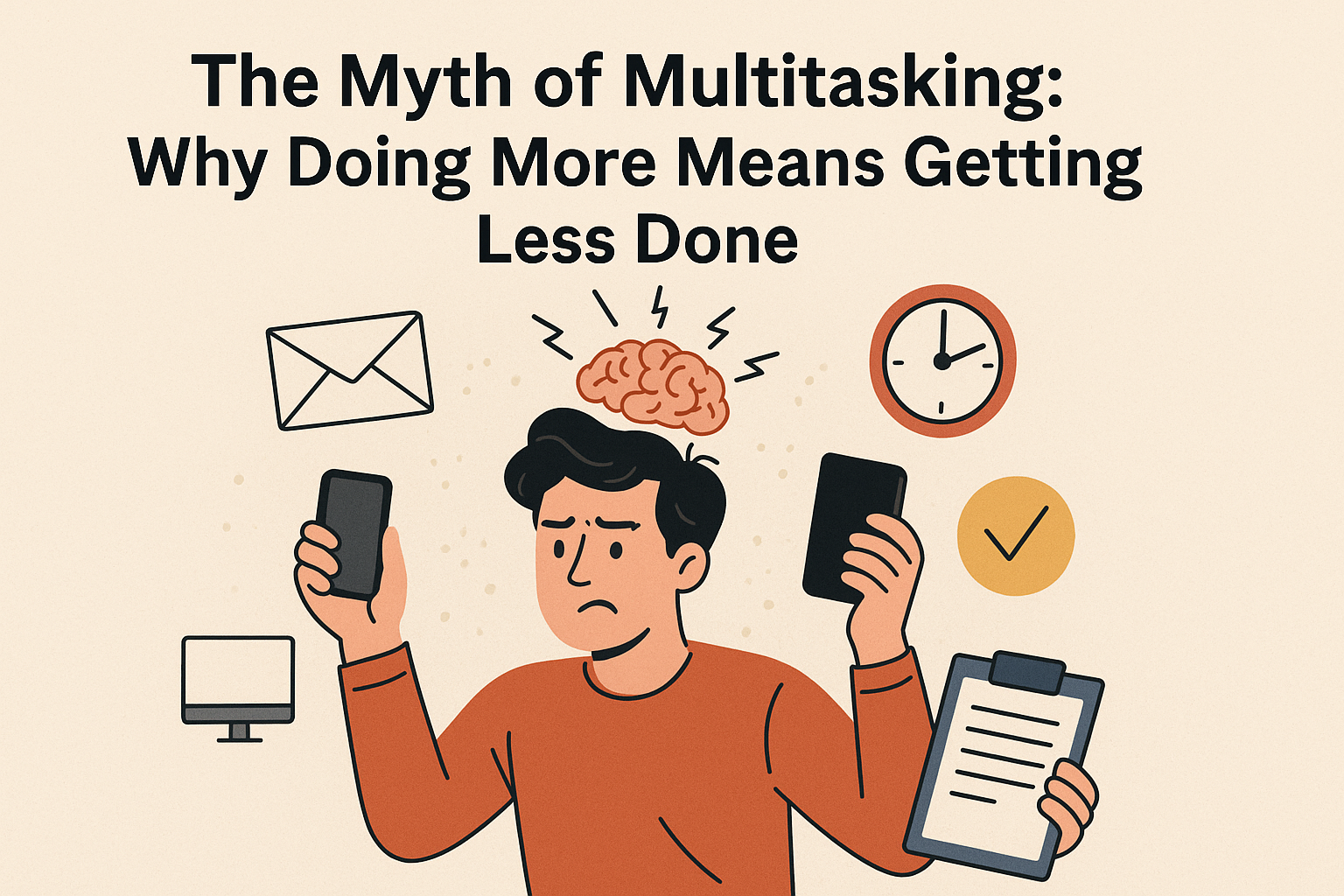
In a culture obsessed with efficiency and hustle, the myth of multitasking has become a widely accepted badge of honour. We pride ourselves on juggling calls while replying to emails and listening to podcasts, all in the same breath. But multitasking is not just misleading — it’s damaging. Scientific evidence consistently shows that multitasking reduces efficiency, impairs cognitive function, and drains mental energy.
This article exposes the truth behind multitasking, revealing how it’s sabotaging your success and what smarter strategies you should use instead.
WHAT ACTUALLY HAPPENS IN YOUR BRAIN WHEN YOU MULTITASK
The human brain is not wired to handle multiple complex tasks at once. What we think of as multitasking is usually task-switching — rapidly shifting attention between different activities.
According to neuroscientists at Stanford University, people who multitask excessively have worse attention spans and memory performance than those who focus on one task at a time. When you switch tasks, your brain incurs a “switch cost”, requiring time and mental effort to refocus. This cost can be as high as 40% of your productive time.
This undermines the entire belief system behind the myth of multitasking — instead of saving time, you’re losing it.

THE MYTH OF MULTITASKING VS. TASK SWITCHING
The Myth of Multitasking in Practice
It’s important to distinguish between simple multitasking (like walking and talking) and cognitively demanding multitasking (like writing an email while attending a Zoom meeting). The former may work; the latter rarely does.
In truth, the brain can’t process two tasks requiring high-level cognition simultaneously. Instead, it performs a quick attention shift — meaning you’re never truly giving your best to either task. That’s why pilots, doctors, and other high-stakes professionals are trained to eliminate distractions and focus single-mindedly during critical tasks.
By falling for the myth of multitasking, you’re diluting the quality of your output — and inviting burnout.
THE COST OF ATTENTION RESIDUE AND COGNITIVE FATIGUE
HOW THE MYTH OF MULTITASKING PLAYS OUT
Have you ever tried to switch from writing a report to checking social media, only to find your brain feels foggy? That’s called attention residue — when part of your focus remains stuck on the previous task. This residue depletes your cognitive bandwidth and impairs your performance.
The myth of multitasking has trained our brains to constantly scan for the next thing, leading to increased anxiety, decreased satisfaction, and long-term exhaustion. Studies from the University of London even found that multitasking can temporarily lower your IQ — the same dip seen after a night of no sleep.
It’s a silent productivity killer we often glorify.
WHY BUSY DOESN’T MEAN PRODUCTIVE
We often equate being busy with being effective — but they’re not the same. The glorification of hustle culture has reinforced the myth of multitasking as a badge of honor. But busyness is not a productivity metric; outcomes are.
In our recent article “The Productivity Trap: Why Working Harder Isn’t Working Smarter”, we discussed how being constantly “on” creates an illusion of achievement. When you divide your attention, you fragment your progress — and that busyness becomes just noise, not impact.
FOCUS IS THE NEW CURRENCY
In a world where attention is constantly hijacked by apps, ads, and notifications, focus is a superpower. The ability to work deeply on one task at a time is more valuable than ever.
Cal Newport’s concept of “Deep Work” highlights how undivided attention leads to mastery, faster results, and creative breakthroughs. Rejecting the myth of multitasking means protecting your cognitive resources and choosing quality over quantity.
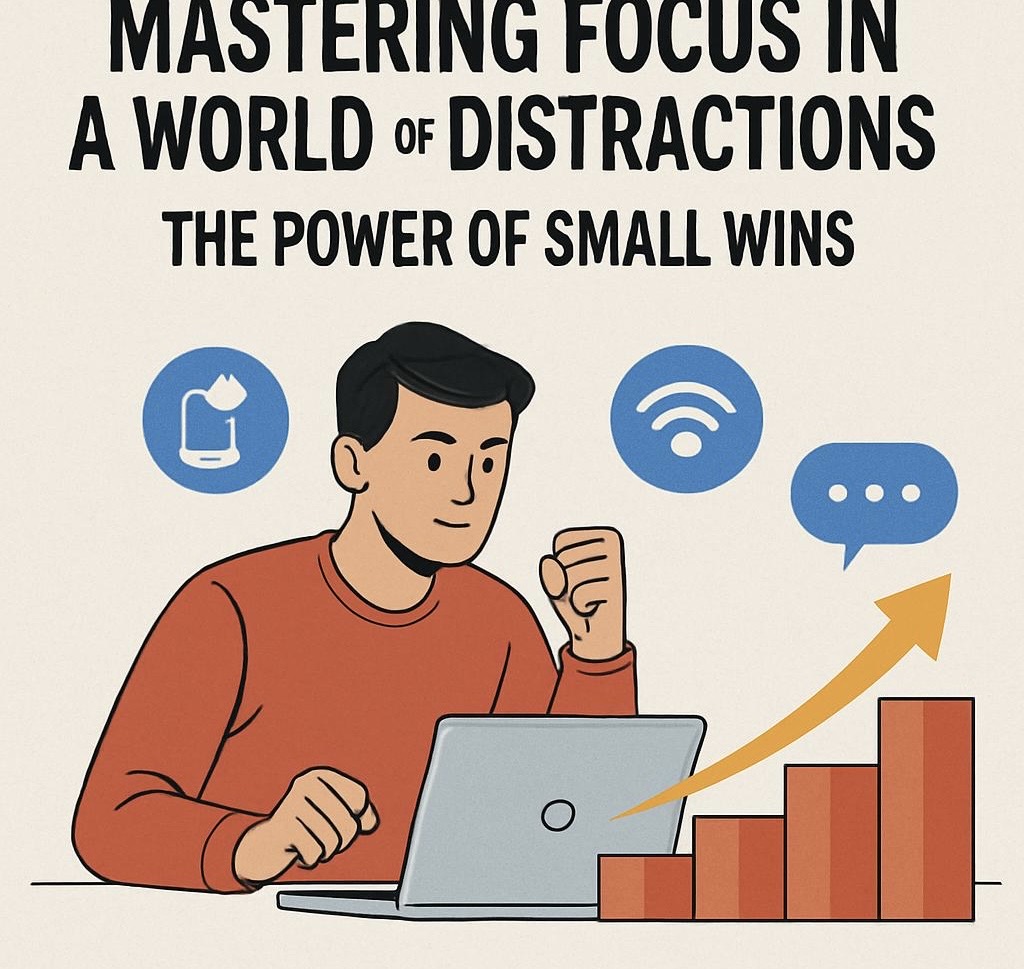
As we discussed in “Mastering Focus in a World of Distractions”, building focus isn’t about brute willpower — it’s about designing smarter habits and environments.
HOW TO ESCAPE THE MULTITASKING TRAP
Build Systems, Not Schedules
To beat the myth of multitasking, you need more than a to-do list — you need systems. Here’s how:
- Time-block your day into dedicated focus sessions.
- Batch similar tasks like responding to emails or making phone calls.
- Use the Pomodoro technique to balance deep work with mental breaks.
- Silence notifications and set app usage boundaries with tools like Freedom or Cold Turkey.
Prioritise with the Eisenhower Matrix
Not all tasks deserve your full attention. The Eisenhower Matrix helps you categorize tasks into:
- Urgent & Important
- Important but Not Urgent
- Urgent but Not Important
- Neither
This method helps you focus on deep, meaningful work — instead of constantly reacting. It’s one of the most practical ways to fight the myth of multitasking with intentionality.
THE BOTTOM LINE: SINGLE-TASKING IS A SUPERPOWER
The truth is clear: multitasking is a productivity myth that leads to poor results, mental fatigue, and a false sense of accomplishment. The myth of multitasking persists because it feels good to be busy — but that’s a trap.
If you want real progress, success, and mental clarity, you must embrace the power of single-tasking. That’s how you protect your brain, produce your best work, and live smarter — not harder.
Your insights might inspire someone today.